

Want to quit your 9-5 and build a successful coaching business from scratch?
So that you can finally achieve more freedom, fulfillment, and live your life on your own terms.
Today, I share the exact steps I’ve used to build my own coaching business and helped 1000s do the same.
Ready to get started and build that business you’ve always wanted? Let’s go.
Steps:
Step 1: Why coaching is the best way to replace your 9-5
Step 2: Can YOU build a successful coaching business?
Step 3: How to find the right business idea
Step 4: Use a profitable coaching business model
Step 5: Get your first paying coaching clients in the next few weeks
Step 6: How to scale to a six-figure business
Step 1: What is coaching?
Daydreaming about leaving your job behind and striking out to start a business of your own?
Whether you’re seeking a flexible schedule, a more fulfilling career, or a higher income, there’s never been a better time to ditch your 9-5 and set up shop as an entrepreneur. Intuit estimates that within the next few years, almost half of the workforce will be self-employed. And no wonder: By reaching your potential clients online, you can get started selling your coaching services right away.
Ready to find out if starting a coaching business is the right thing for you? Let’s dive right in.
1. Definition of a coaching business
First, let’s make sure we’re on the same page in terms of what exactly coaching is.
A coaching business is simply a business where you use your expertise, advice, and guidance to help people transform their lives.
And coaching is something most of us can do. After all, there are coaches in almost any industry:
Health, career, relationships, personal finance, business, productivity, spirituality, sports, life, parenting…
But you might be thinking:
“Should I start a coaching business?”
That’s what we’ll look at next.
2. The benefits of starting a coaching business online
If you want to replace your 9-5 income with a business, coaching is one of the most powerful alternatives.
Why?
It’s the business that affords the most freedom and flexibility while being scalable.
There’s simply no more effective, efficient or impactful way to replace your salary as you transition from employee to entrepreneur.
I should know. In the first four months after having started my digital advertising agency, I made over six figures. This allowed me to comfortably transition into full-time entrepreneurship.
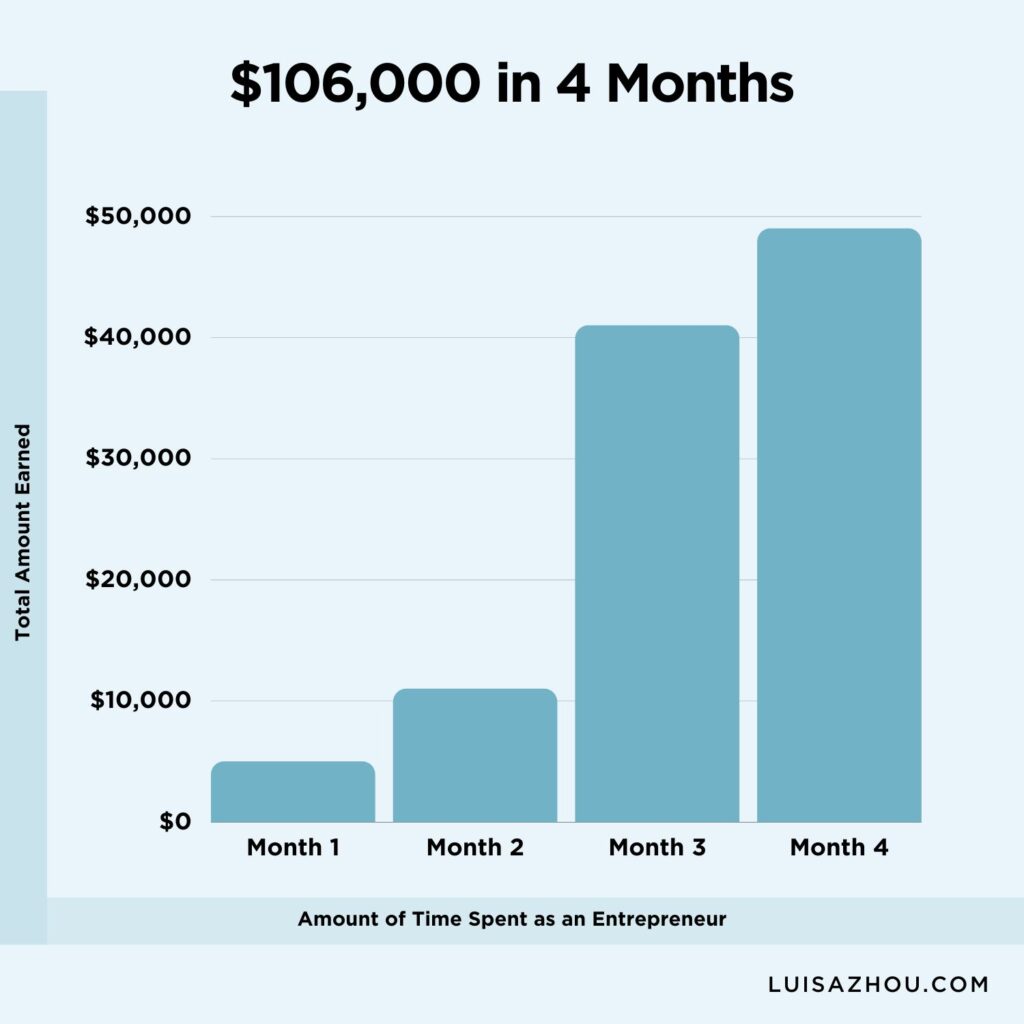
Replace your income fast
Want something similar for yourself?
That’s what a business will help you do.
Let me explain:
With a coaching business, you target a handful of clients with a premium package instead of trying to scrounge up a thousand $7 sales like a traditional e-commerce model.
Let’s say you charge $2,000 for your coaching. (Does that figure sound high? Make sure you read my Pricing chapter.)
So if you have 5 clients, you’ve already made $10,000.
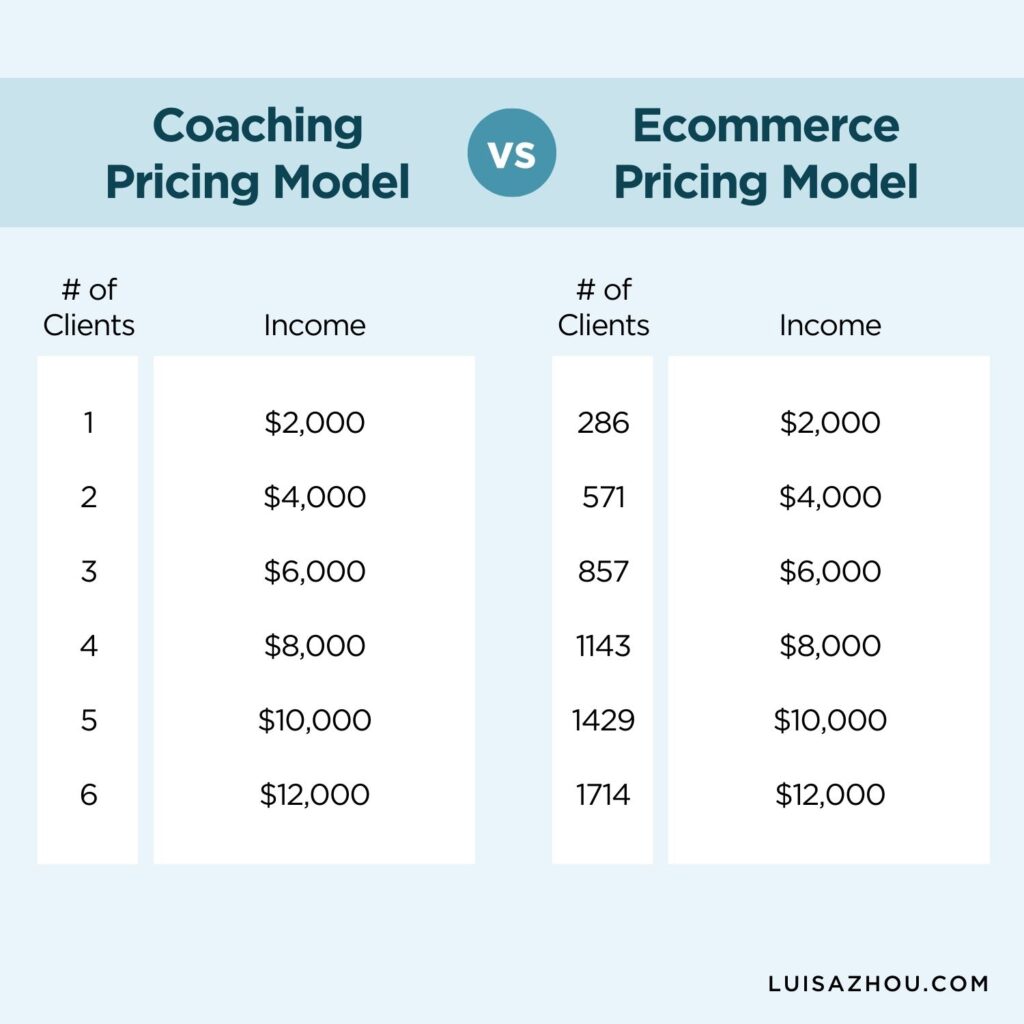
See how that helps you build a thriving business fast?
In fact, I was able to grow my own business to over 7-figures in the first 12 months.
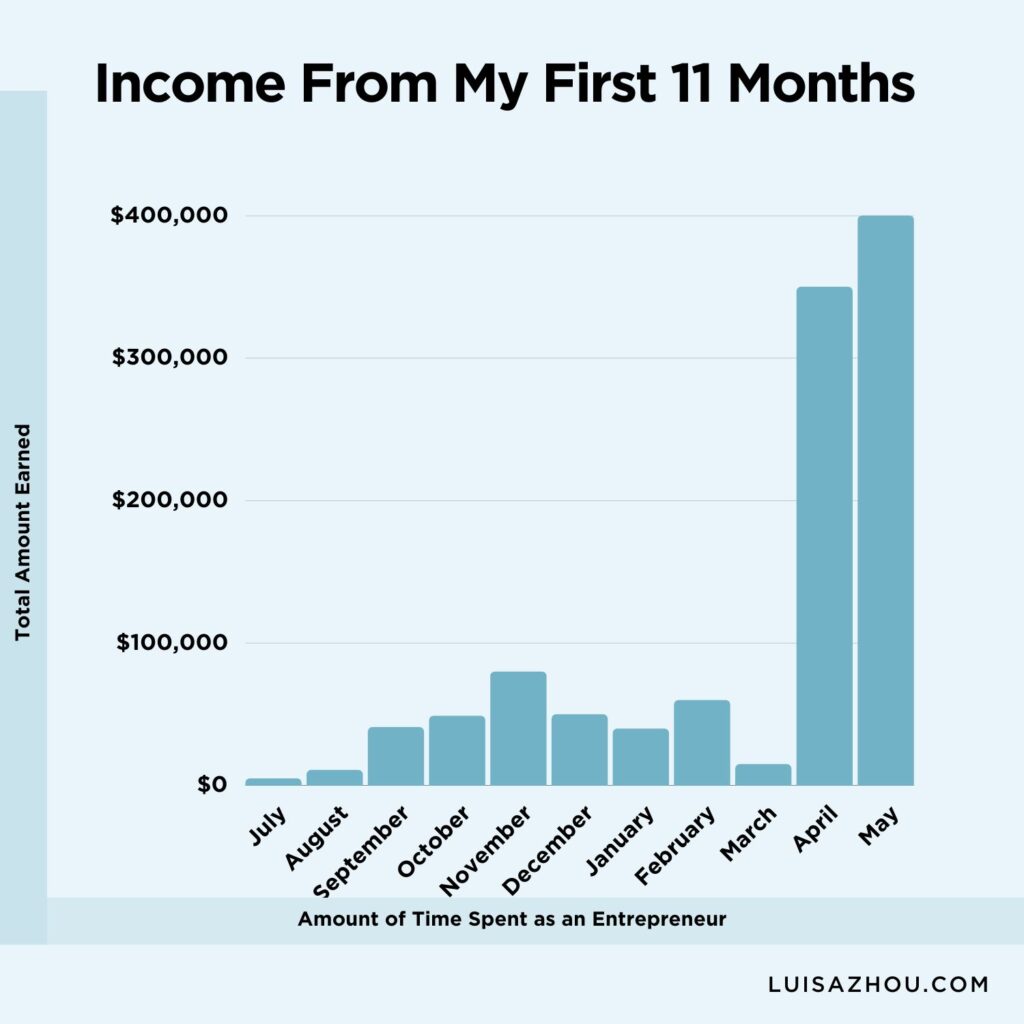
Today, I’ve helped thousands of students start their coaching businesses and replace their salaries within a year.
Leverage your time and increase your income
At the same time, you can create lasting relationships with the people you serve, and you can actually transform their lives. (Try getting that in a day job!)
In the end, this will help you scale your business with online courses. And that’s not all. You can add other offers to your business like group programs, workshops, and retreats. Even books and talks!

Here I am giving a talk at a 2018 Gary Vaynerchuk event in London. The possibilities are endless!
Your coaching offer is only the beginning.
Next:
Can YOU build a successful business?
Step 2: Can YOU build a successful coaching business?
Maybe you’re thinking, “Do I have what it takes to become a coach?”
The answer is yes. You can build a thriving and profitable coaching business.
And here’s how.
1. Are you qualified to be a coach?
Worried you’re not qualified enough to make it as a coach?
It’s more than possible for you to turn your existing skills, talents, and hobbies into a profitable business of your own. But you need to stay laser-focused on the right things instead of letting yourself be pulled in a million directions. (And by the end of this guide, you’ll know exactly what to focus on.)
One area where I see so many potential entrepreneurs get derailed is thinking that to start a coaching business they need to get a certification.
The truth is that’s really just a myth (mostly).
Coaching is not the same as counseling, which often requires a degree or a certification.
Instead, what matters is your experience.
Your clients pay to get access to you, your skills, and the transformation you help them get.
Need more proof? Let’s use me as an example.
I don’t have an MBA.
But what I do have is over 10 years of business experience in various industries and a record of helping thousands of students in more than 20 different industries build successful online businesses.
I get my clients results and that’s why they hire me.
And the same applies to you.
Pin me for later!
2. Coaching business examples
Need more examples of real-life businesses?
Here’s how five of my clients are using their experiences and skills to sell their coaching and consulting offers.
#1: Dating coaching: Ruby Le
My client Ruby Le draws on her past experience working with companies like eHarmony and It’s Just Lunch to help high-quality men attract more dates.

#2: Medicinal herbs: David Alsieux
My student David Alsieux coaches people on how to use herbs to take charge of their health, skills he picked up after a personal family health incident.

#3: Sales coaching: Sanae Floyd
My student Sanae Floyd started her business and grew it to 5-figure months by drawing on the decades she spent working in sales.

#4: Career coaching: Emily Liou
Emily Liou leveraged her experience as a recruiter for Fortune 500 companies and grew a career coaching business that helps people find fulfilling jobs.

Feel more confident that you have it in you to build a profitable business?
Great! But what service should you sell?
Let’s find out how you can pick the right, profitable business idea.
Step 3: How to find the right business idea
Wonder how you can find that perfect coaching business idea?
Contrary to what most people think, this is not about coming up with the next Facebook. Instead, use what you already have.
Here’s how to find YOUR perfect business idea to start a coaching business.
1. What I did to grow several 6 and 7-figure businesses
Full confession: This business isn’t my first rodeo. Before I began coaching people on how to start their online businesses, I had a few hustles of my own in various niches.
First, the tutoring company I scaled to 6 figures. (I shut this down because I realized I didn’t want to spend the next two decades of my life thinking about the same things I’d spent my first two decades obsessing about!)
Then the mobile payments start-up that brought in a multi-million dollar valuation before fizzling out.
Next on the list? Consulting in Excel (too boring for the long-term), followed by a brief but profitable stint as a career coach for hire (closer to what I wanted, but still not my passion).
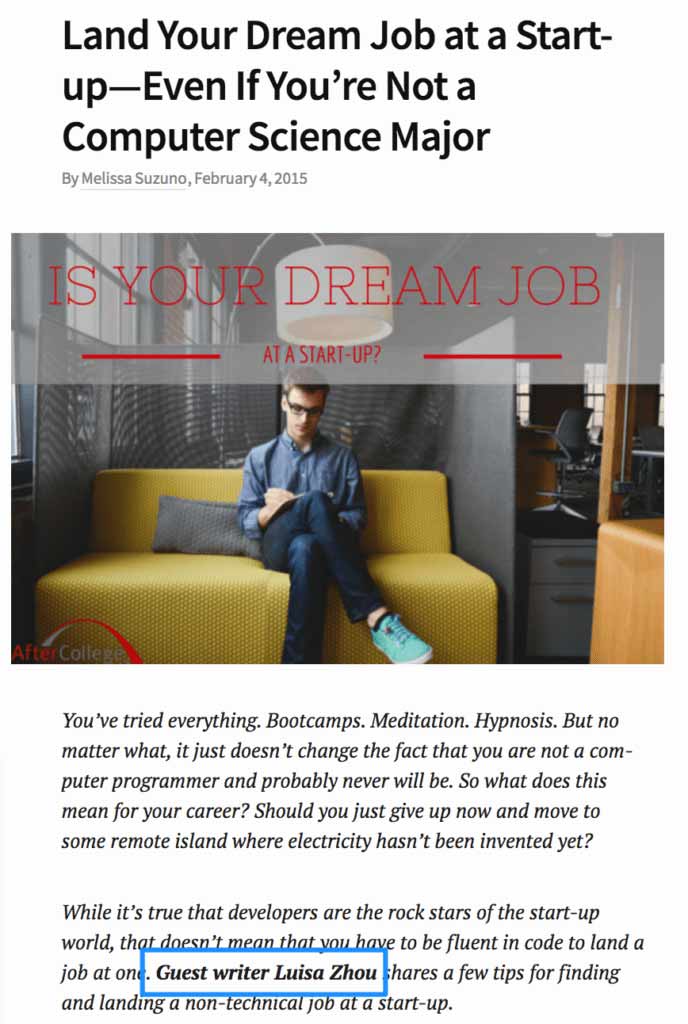
The hustle that allowed me to replace my salary? Taking my job skills in digital advertising and starting a digital advertising consulting business.
Curious to know how you can take a detour and find that perfect niche straight away without having to go through these same hurdles?
Here’s how.
2. Find your profitable niche
Coaching business ideas are literally everywhere, but if you don’t follow a formula that works, it’ll be more like throwing spaghetti at the wall than a recipe for success.
Ultimately, starting your own online coaching business is all about solving a problem and giving a solution. You’re already doing that on a daily basis in your day job. Now it’s simply time to get paid by clients instead of your employer.
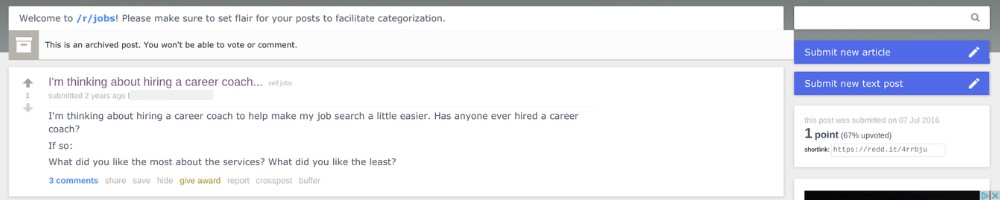
Here are just a few examples of people looking for coaches in different niches.
Career coach:
Source: Reddit
Relationship coach:
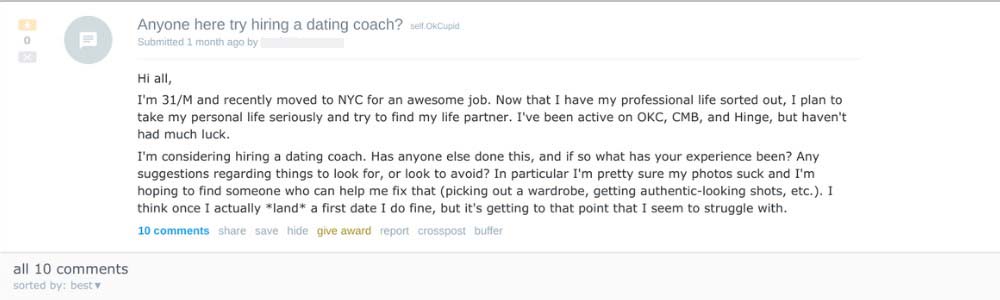
Caption: Source: Reddit
So what is the formula you can use to find your own, profitable niche?
Step #1: Brainstorm business ideas
You have existing skills, strengths, and experiences that other people want to pay you for.
You just need to choose the best idea for yourself and here below, I share how you can do that right now.
Before you sit down to brainstorm, grab a pen and paper.
Then, take 10 minutes to write down at least 10 ideas.
Did you overcome a big challenge?
Maybe you’re good at getting promotions. Or maybe you lost weight. Or you’re great at automating your savings.
Have you learned a skill in your 9-5?
Are you a copywriter? Or a chef? Or an executive assistant? These (plus so many other skills) are skills you can use to start your coaching business.
Do you have a hobby you’re passionate about?
Do you like running? Or singing? Or are you a member of Toastmasters and know how to deliver a great speech?
What are your strengths?
Call 5 friends and ask them what they would describe as your core strengths.
There, now you have at least a few more ideas to work with!
Step #2: Choose your niche
It’s time to choose your niche.
Take a look at your list of ideas.
Which idea feels like that thing you do even in your spare time? That’s an idea you’re probably pretty passionate about.
And is this an existing service?
For example, if you search Google, YouTube, Facebook groups, Upwork, or another platform, do people offer similar services? Are people looking for help with what you want to offer as a coaching service?
That’s a great sign that there’s a market for your idea and that it has the potential of being a profitable niche.
Step #3 Choose a name for your business
The final step is to choose a name. Fortunately, brainstorming coaching business names is actually easier than you might think.
I always recommend my students to use their own name (LuisaZhou.com). If you have a more common name, just put a “coaching” or “consulting” at the end (LuisaZhouCoaching.com).
Now you have the foundations in place.
And that leads us to the next question:
How do you make sure your business is profitable from the start?
Let’s take a look at one of the core pillars of your business:
Your business model.
If you are enjoying this post, try pinning the image below for later!

Step 4: Use a coaching business model
What most people do when they’ve found their niche is to start creating the perfect website.
But that will only keep you stuck. We need to be MUCH more strategic and make sure your business is positioned for success.
Here’s how to do it with the right, profitable business plan (and yes, this comes WAY before your website).
1. Create an offer that people are actually willing to pay for
How do you create an offer people can’t resist? There are two steps you need to take.
Step #1: What solution do you offer?
First, let’s figure out how to define the solution you sell.
You see:
With your coaching, you solve a problem.
And there are three things people are willing to pay for. These are:
1. Something that makes them feel better. (For example, confident, loved, or happy.)
2. Something that makes them be better. (For example, better at public speaking or hotter.)
3. Something that makes them have more. (For example, more money, time, or freedom.)
Ask yourself:
What solution do you offer your clients?
Step #2: Create a specific offer
Next, you need to create a specific offer.
What do I mean?
Instead of offering career coaching, you help young professionals advance in their careers at a 2x faster pace than normal. Intriguing, right?
Want to work through these steps? Watch this video now:
Use the next 20-30 minutes to figure out your solution and offer. Then, move on to the next step.
2. Target people who are willing to pay
It’s heartbreaking to dedicate so much of your barely existent spare time to building a business of your dreams only to find out that the people you wanted to work with can’t actually afford to hire you.
Spare yourself the pain and choose a market where there’s money, or you will have given yourself a very expensive hobby and not a business.
How?
For example:
If you’re a career coach who targets recent college grads, you’ll have a hard time selling premium coaching packages.
But if you target people who’ve been in the workforce for at least a few years? That’s a market with the ability to pay.
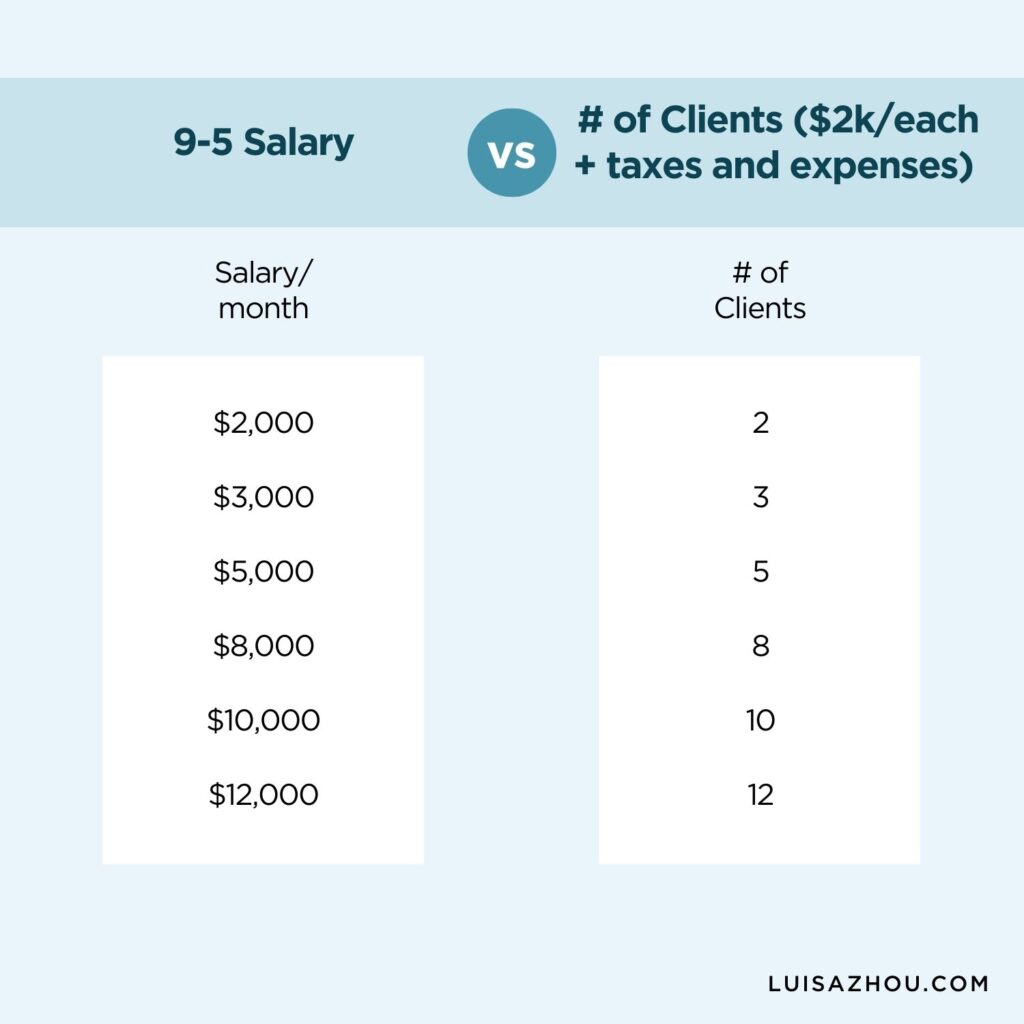
3. Create an offer that allows you to replace your salary while working with a small number of clients
Finally, create an income-replacing offer.
Most online coaching businesses start with a one-on-one model, where you are working privately with your clients to help them get the best results possible through customization and support.
Why is this a great business for you as a new entrepreneur?
Working privately with a client allows you to charge a premium because you’re bringing your own experience, time, and support to the table.
The reason you’re able to charge a premium for this isn’t because your market is interested in paying you what your time is worth.
No, your clients pay a premium to get the best results possible in the shortest (within reason) time frame possible.
Thus, online coaching allows you to replace your salary with a small number of clients… And you can finally quit your 9-5.
That’s how I was able to replace my 6-figure salary after just four months of running my digital advertising consulting business.
Focus on your audience and the money will follow
Fair warning: if you’re in this business to make a ton of money overnight while providing little to no value to anyone, it will absolutely catch up with you.
It’s the results you can get your clients and the transformation you provide that determines whether your business will work, so keep your attention on your audience and continue to refine your offer as you grow.
At what price point can you sell your coaching offer?
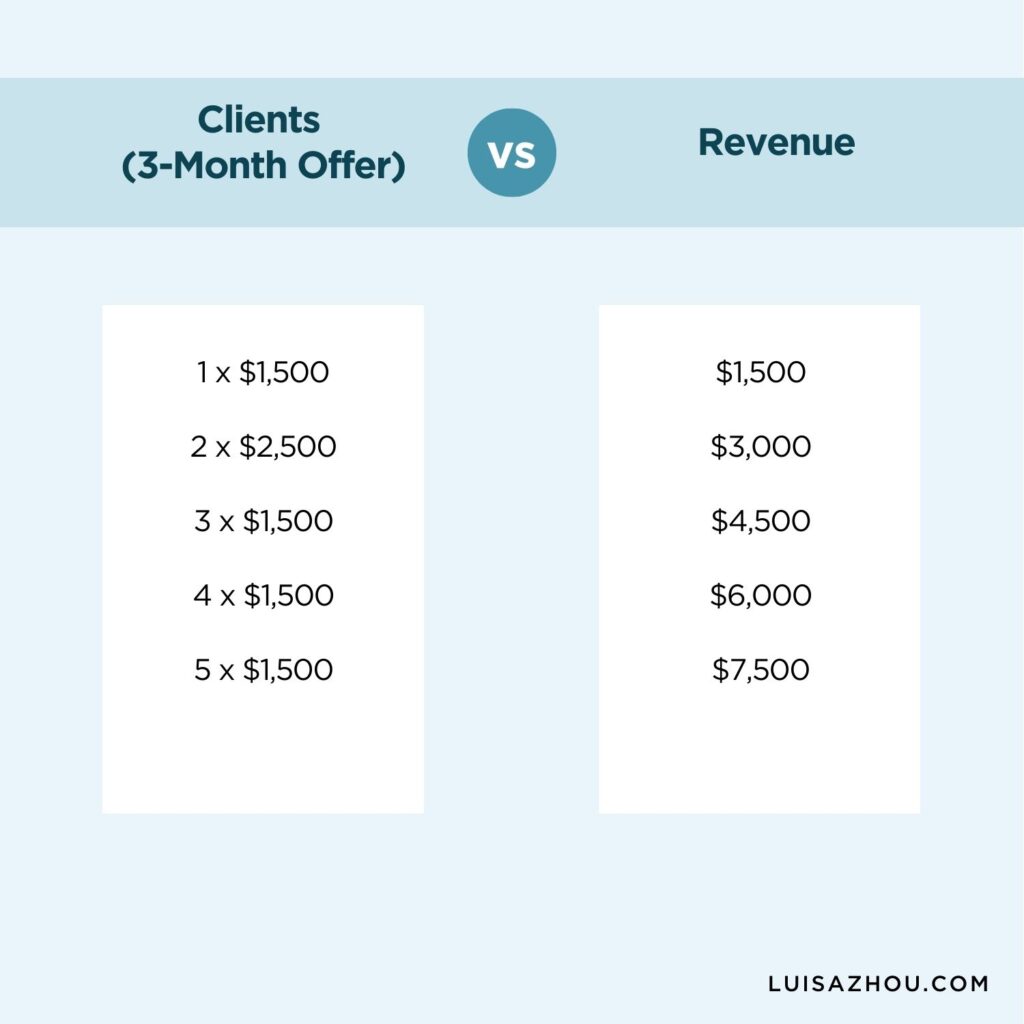
A good rule of thumb for new coaches is to create a 3-month package where you support your client with weekly or biweekly calls.
This helps you bring in cash without having to create a product to sell.
You can price your package around the $1,500 mark and even offer monthly payment plans if you want to have recurring income.
When can you (finally) give in your notice?
I advise most of my students to quit their day jobs after earning 2x their monthly salaries so they can make sure they have enough money for their business expenses and taxes.
And remember:
Thanks to your high-end offer, you don’t need that many clients to get there. (That’s also why I don’t recommend charging per hour or per month. These pricing models will just take so much more work to replace your income.)
Woah! We’ve covered a lot, but there’s still a few more things we need to look at.
After all, how do you get your first client?
That’s what we’ll look at next.
Step 5: Get your first paying coaching clients in the next few weeks
Maybe you’re thinking:
“Great, Luisa, but where, pray tell, are these hypothetical clients actually coming from?”
You’re in luck. At the end of this chapter, you’ll know exactly how to get your first paying coaching clients!
1. Your marketing plan
First, we need to talk about your marketing.
Because coaching businesses are more transformational than transactional, you’ll want to create marketing content that builds relationships and then invites prospects onto a sales call with you.
Let me explain what this looks like:
When I started my first online coaching business, I helped a woman set up a basic advertising campaign.
She asked how she could work with me. I told her my price ($5000) and she immediately said yes.
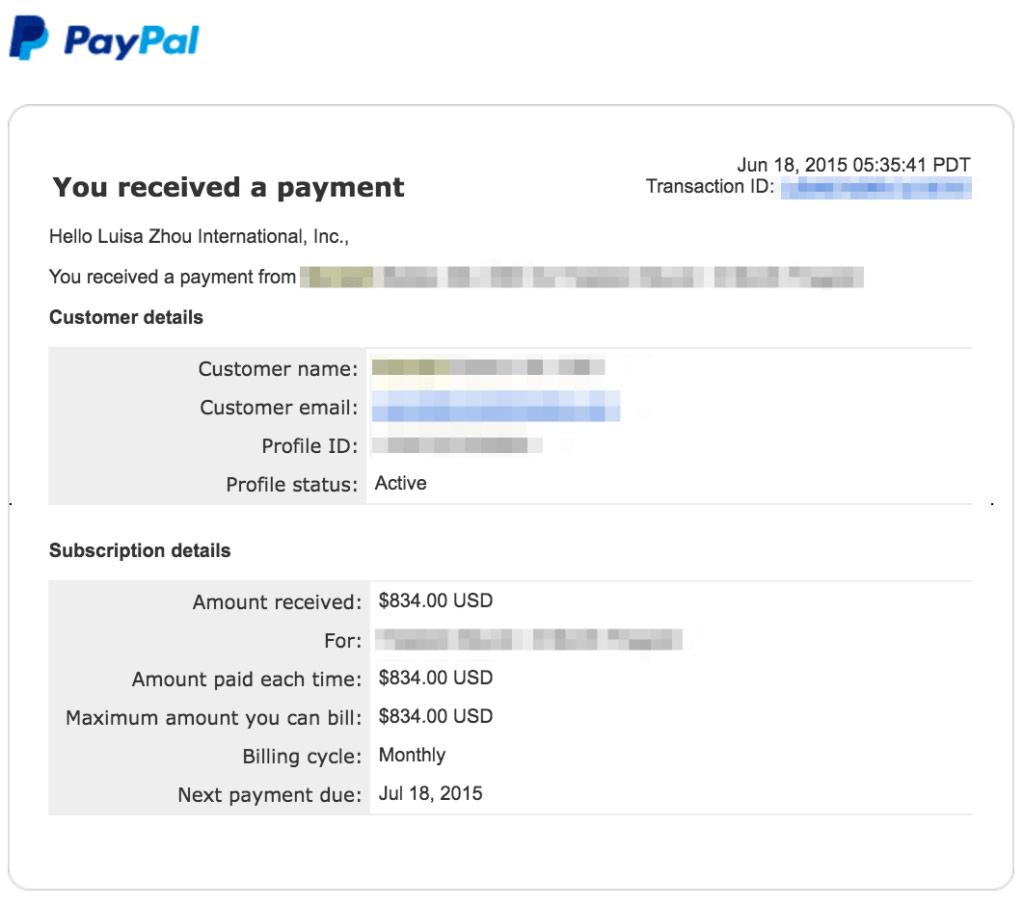
But when I continued pitching my services, I got rejected as too expensive. The reason? I had used a lot of time and effort in helping my first client… So she immediately understood the value of my services.
I realized I needed to change my approach so that I wouldn’t drain myself in the process.
Let’s find out how I did it.
2. How to give a lot of value… And get clients on sales calls!
There are three steps you need to take. These are:
Step #1: Find relevant online groups and forums
Before anything else, you need to find out where your audience hangs out online and on social media. For example, your audience might hang out in Facebook groups (health-focused businesses, business owners), on LinkedIn (career), or Reddit (pretty much every niche under the sun).
Here are five more places to find coaching clients:
So how do you find your target groups?
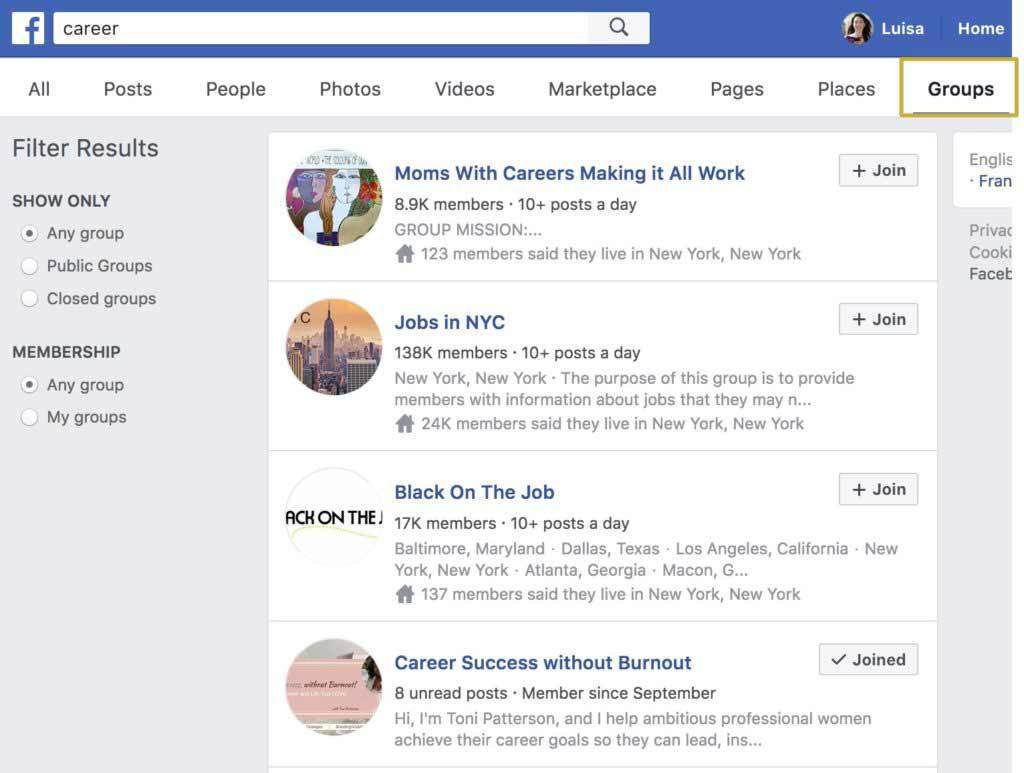
Go to the social media platform of your choice. Type in a keyword that describes your niche.
For example, here’s what the results look like if you go to Facebook and type in “Career” and then choose the “Groups” tab.
Step #2: Start giving value
Next, start initiating conversations and building relationships in your groups.
Not sure how to do it? Use the formula 1000s of my clients have used to get their first coaching clients.
Here goes:
Attention + Value + Call to Action
- First, you catch people’s attention. You can use jokes, questions, or surprising facts.
- Then you keep their attention by sharing value. This can be an insight or a tip.
- And finally, you get them to act by including a call to action. You can use questions or ask people to do something specific, like click on a link.
Do this regularly in your social media groups and you’ll quickly build those relationships with your target audience.
Step #3: Get ideal clients on a sales call
The final step? Sales calls and clients.
This is how you do it:
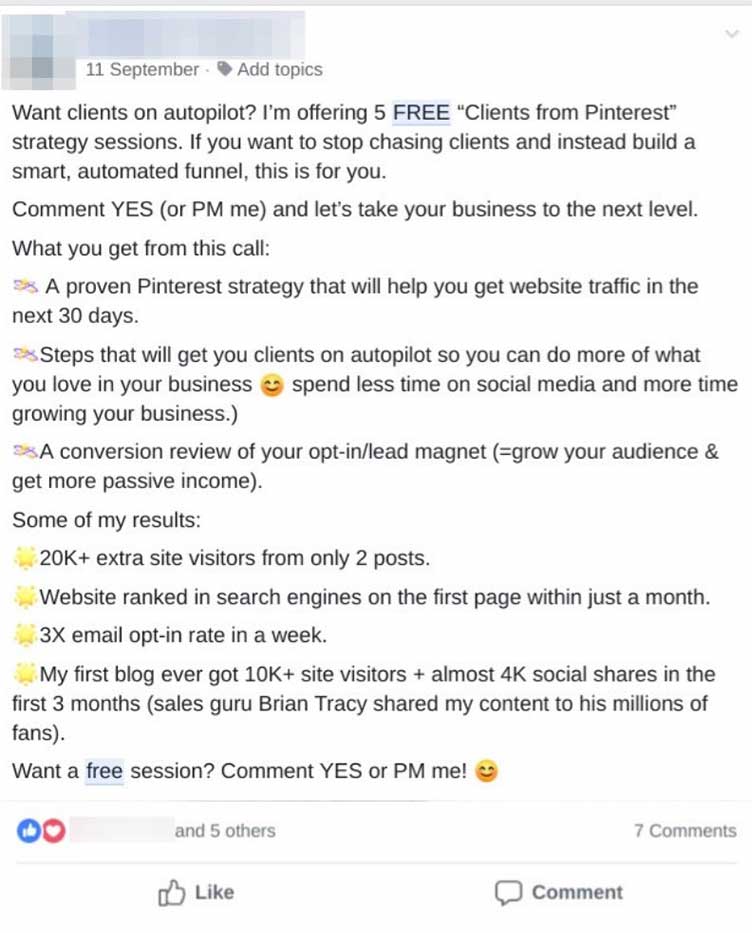
In your group, share a free offer that gets people on a call.
This could be a free assessment or a free coaching call.
Here’s how one of my clients used this to offer free Pinterest assessment calls:
Then, you share free advice for 15-30 minutes.
At the end of the call, ask:
“Did you find this call helpful? I know your goals are … and considering how much we got done in 15 minutes, I would love to help you more. Would you like to hear how we could work together?”
Other strategies to get your clients on sales calls (I teach all of these in my coaching business course, Employee to Entrepreneur) are webinars, guest posting, and partnerships.
What’s the easiest way to schedule a call?
You might be thinking, “Sounds good, but how do I schedule my calls?”
I recommend you use Calendly.
Sign up for an account. Then, set up your first event type:
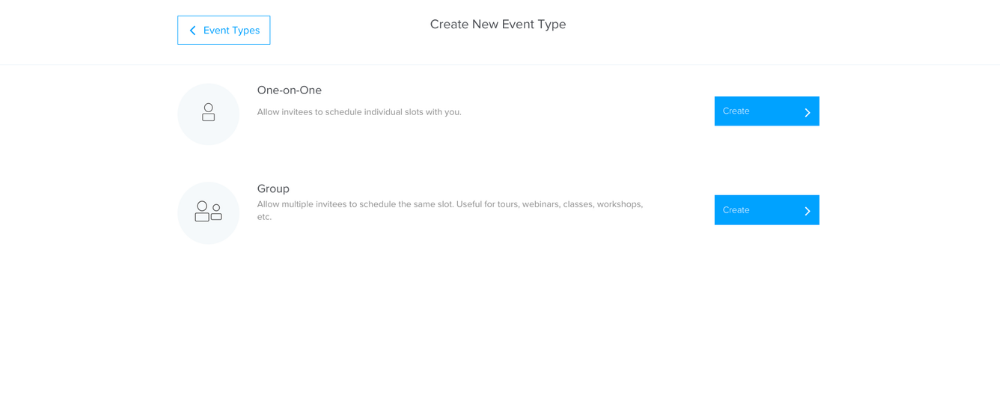
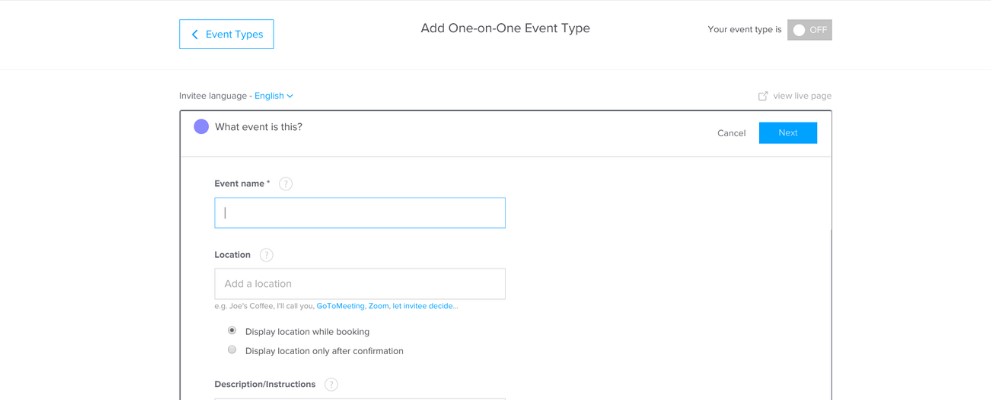
You choose everything from your availability to questions you ask people when they sign up.
Then, you share a link and send it to people who want to book calls with you.
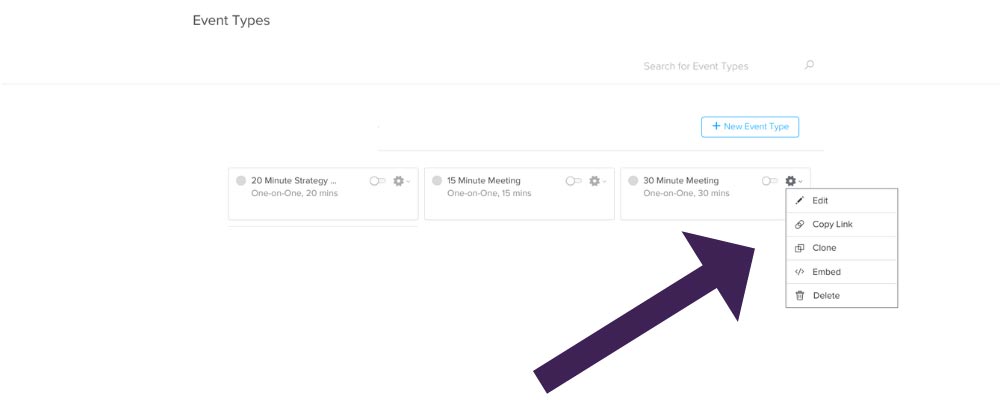
Now you’re ready to get calls on autopilot!
And once you have some clients, how do you build your coaching skills and deliver an unbeatable experience? Here’s how to hold powerful coaching sessions.
Step 6: How to scale to a six-figure business
Here’s the thing:
You don’t have to work with clients 1-on-1 for forever.
Once you’ve proven that your solution is solid and your clients get results, you can start thinking about scaling. In this chapter, you learn how.
1. How to use your time effectively and increase your income
Scaling is when you expand beyond one-on-one in order to better leverage your time and increase your income. So, you use less time but sell to more people. You can do this with two offers:
#1: Group coaching
Segue into group coaching and reach more people without working more hours by giving group support instead of or in addition to private support. You can even use program coaches and have many coaches support your students at the same time.
#2: Online courses
You can also create a self-study version of your program that doesn’t require your presence beyond building out the initial content, which you can then sell digitally 24/7.
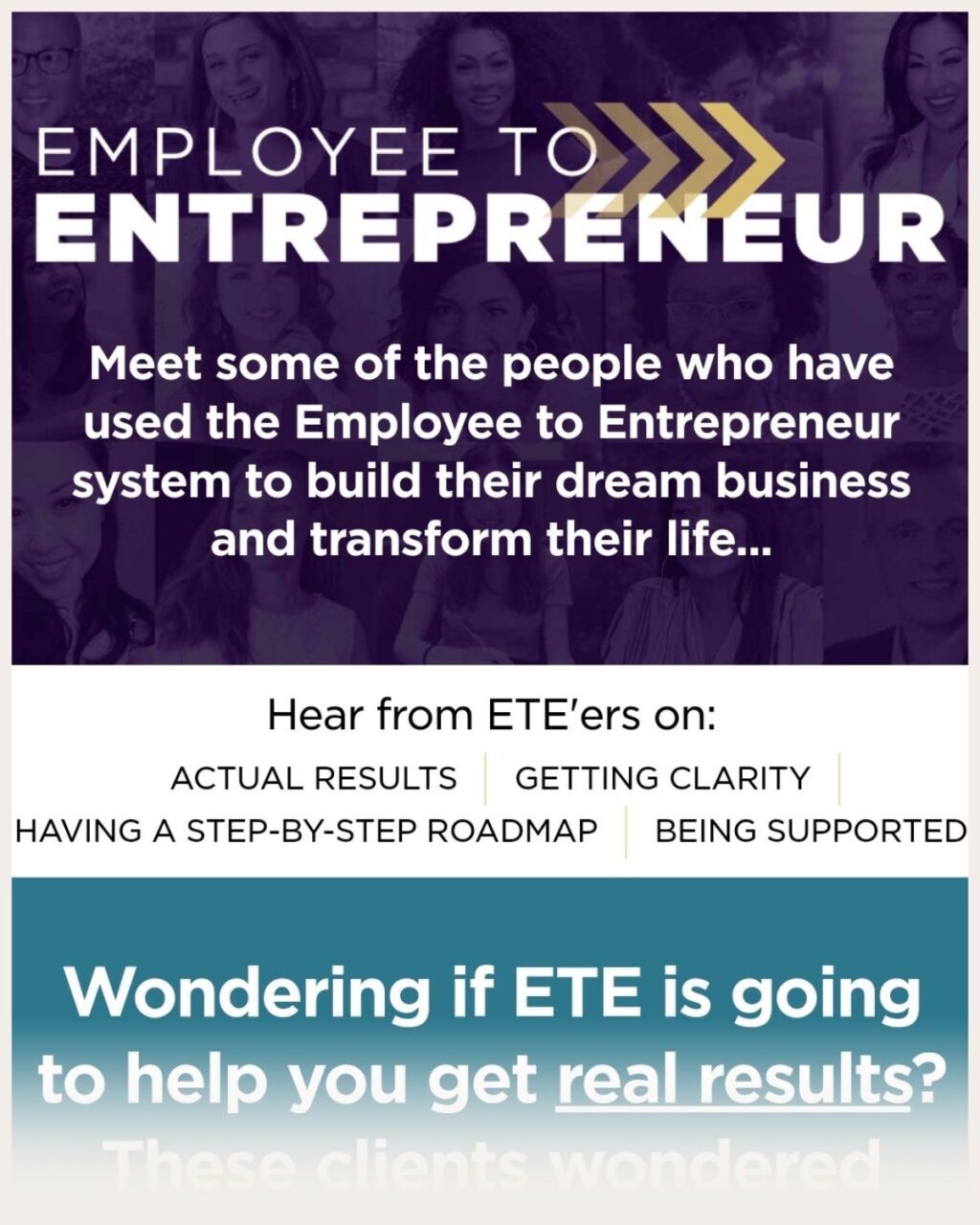
That’s what I’ve done with my Employee to Entrepreneur program:
Or choose to launch these products once or twice per year, whichever feels like the best choice for you.
2. How do you set up your group coaching program or course that scales your business?
Once you’ve decided on whether you want to sell an online training or a group program, it’s time to nail down your offer, marketing, and pricing.
#1: Your offer
But do you have to come up with something new every time you create a new offer?
No. One-on-one coaching, group programs, and online courses are just variations of one core coaching offer.
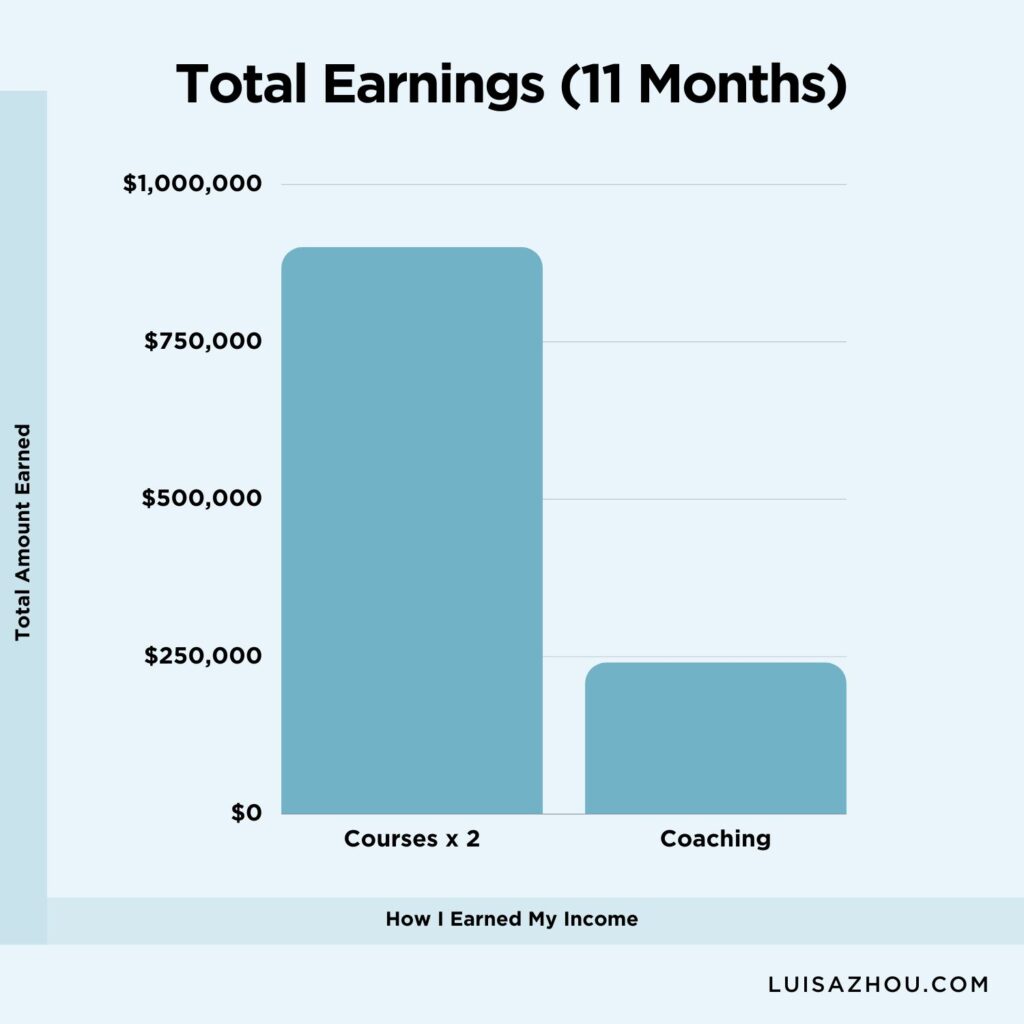
In fact, my business hit the one million dollar mark in its first 11 months with only 3 offerings: private coaching, an introductory course on getting your first paying clients, and a comprehensive system that helps people ditch their day jobs, replace their salaries and start their online businesses.
So, if you’re a career coach, your offerings all have to do with helping people find a career for themselves. You’re just targeting people with different needs by packaging your offer in different ways. The same applies if you want to start a life coaching, health coaching, or financial coaching business.
#2: Marketing
A common method I teach in my Employee to Entrepreneur program is to drive traffic to a webinar and then those webinar attendees to buy your program.
Why? Because this way, you can create an evergreen webinar and then have it running in the background without you having to actively sell your program.
So you scale your business all day every day without actively having to work in it.
This is what it looks like:

That’s it. Once you have your group coaching program or online training up and running you’ll quickly be able to leverage your time and increase your income to 6-figures.
Let’s start building your coaching business today!
That’s it! If you’ve ever wondered how to start a coaching business online, now you know.
I am not an anomaly and neither are my students. You CAN start a business and make money with the skills you have right now.
However, you DO need the right strategy.
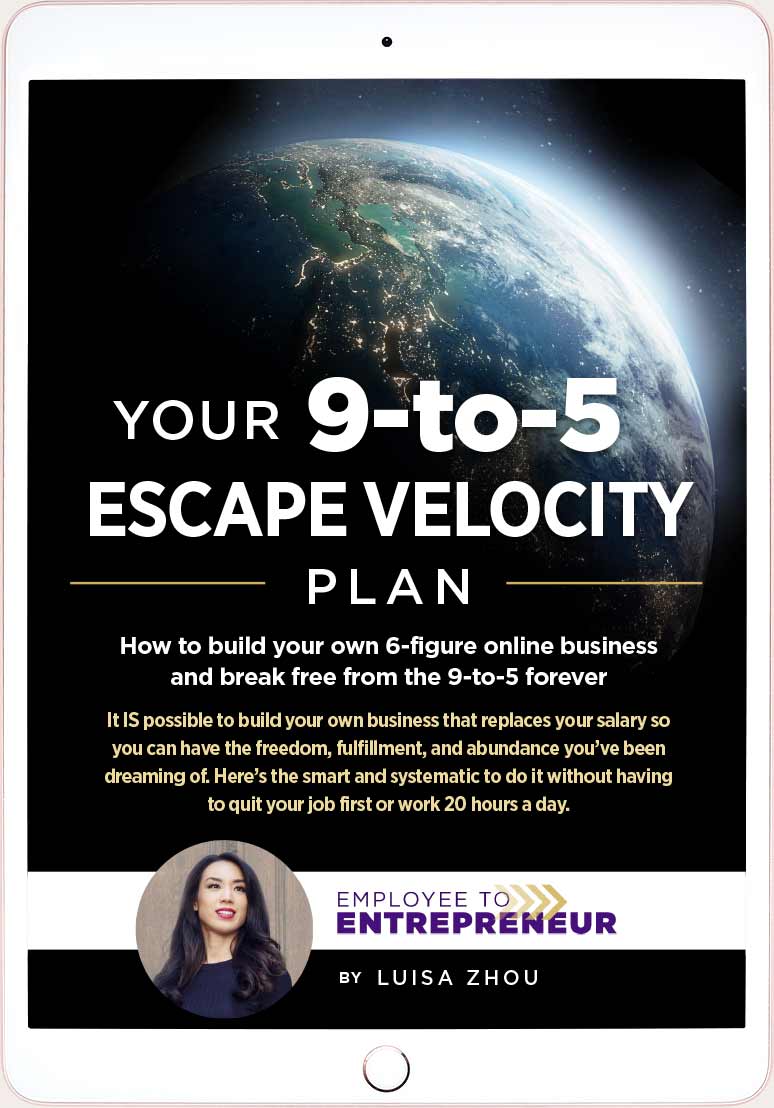
So, if you want to make it extremely simple to implement this guide, get my free blueprint that shows you how to build a six-figure coaching business:
Learn more:
The Best Coaching Business Model






13 Responses
Hi Luisa,
I have enjoyed reading all of your content. You make the process very easy to understand and I love your strategic approach. I am a registered nurse and have many ideas for a business as I have an interest in helping others with chronic disease and moving into the functional medicine approach with wellness. I also have an interest in helping women/ young ladies who need encouragement with not feeling worthy. Anyhow, I am looking forward to the challenge!! Kathleen
Happy to hear it, Kathleen! 🙂 And looking forward to supporting you in the challenge!
Hello Luisa! Your story is remarkably impressive and you are truly an inspiration! Thank you for allowing us all to connect to your wisdom. I appreciate the fact that you broke it down into chapters which actually made me feel I was reading a book, which I love to do! These are enlightening coaching information! I Am currently working on sales, marketing, networking, website to hopefully start receiving high paying clients who want my service! I’m also looking forward to this challenge! What time does it start on May 4th? I hope the time works out for I have yoga classes to teach that day. Thank you and God bless! <3 Chessa =)
Hi Chessa! So glad to hear you found this helpful. 🙂
The challenge is a day-long event, so you can read the email and participate whenever you have time that day. 🙂
Perfecto! I’m excited now! Thank you again for this opportunity! Thank you also for accepting me in the FB group, Namaste! =)
Luisa, Thank you for this information-packed post! You answered so many of my questions in a succint and energetic manner – I read every word. I am looking into a few coach training programs and trying to gather as much information as I can. I have wondered how to market my services when I get to that point, and answering your four questions provided me real clarity as there was a consistent theme in my responses. Again, thank you!
Thank you so much for this thorough information! I’m planning on becoming a transformational Life Coach
Hi Luisa, I’ve appreciated this article, especially step 6. I’ve adjusted my niche to work with a demographic that I haven’t worked with in the past, so I’ve been getting creative about systemitizing the best ways to help my ideal client find me. This process has given me insight into shifting into groups & online courses sooner than I originally thought I might, & I’ve yet to do them before. I’m finding this process to be taking me more time, rather than streamlining my time so far though. This funnel system is what’s resonating with me, so thank you
It’s not always that people can convey and express information in such a clear and easy understable way. You have done it Liusa. Well done. This article was inspirational, motivational and created to excitement which says” Go now”
The coaching niches I will engage in is :
– Personal Development
– Business Development
– Financial Coaching
I like your approach of Coach- Consultant
Thank you very much
Thank you for such a rich and helpful post Luisa. You held nothing back and I really appreciate it!! Super helpful.
You’re welcome! Glad you found it helpful!
Very interesting article, many people need “how to get out of confusion” and develop their inner potential 🙏
Glad you found it useful!